Overview: Japanese equities outperform, why?
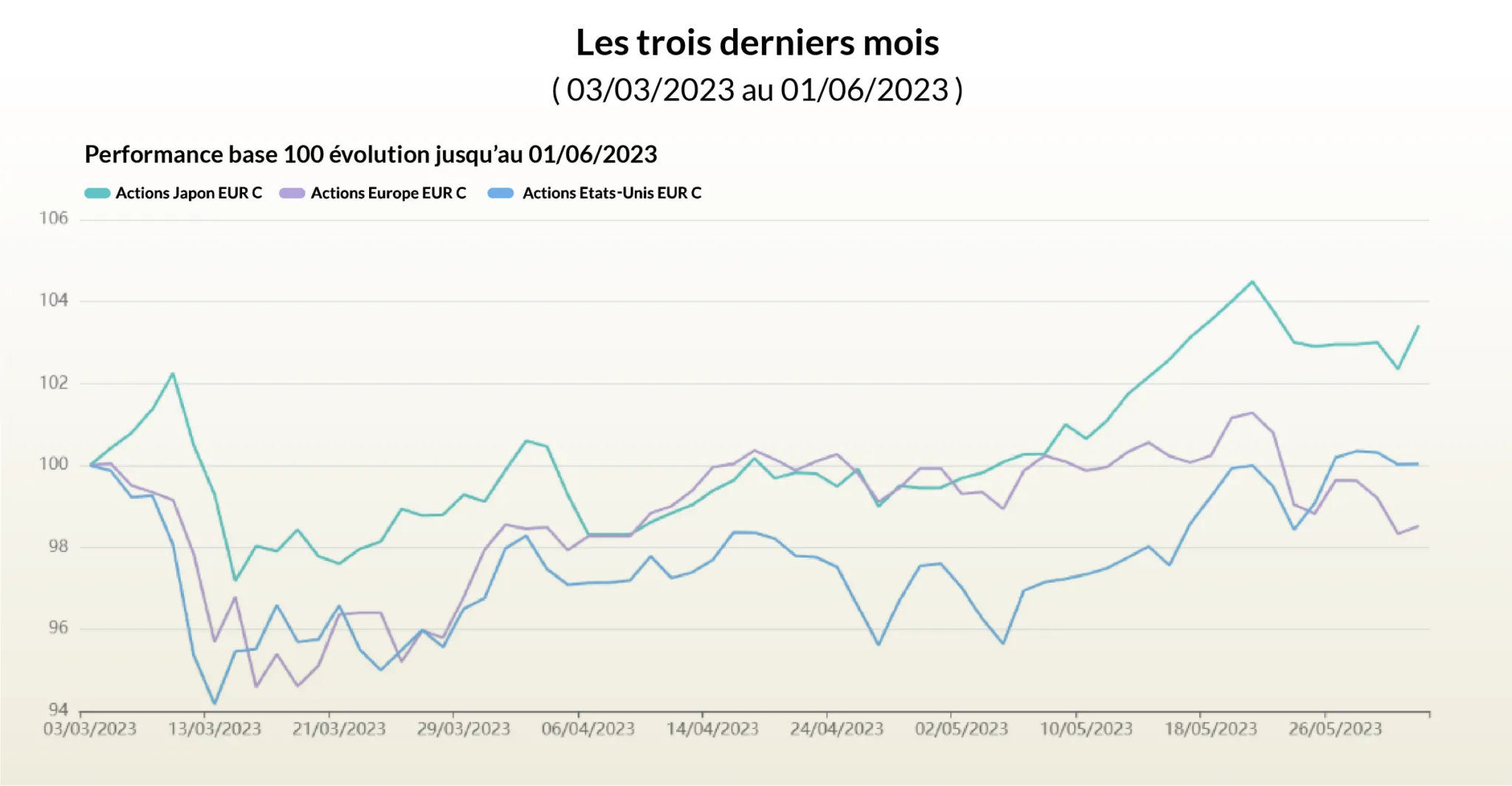
Over the past three months, Japanese equities have outperformed their Western counterparts, a phenomenon we had not observed since Shinzo Abe’s three-arrow policy in the 2010s. This is largely explained by an accommodative monetary policy, maintained despite the change of governor at the Bank of Japan (BoJ) last April. This strategy differs from that adopted by other central banks globally, particularly in an inflationary environment.
As a result, the Japanese yen is depreciating against other currencies, which benefits the Japanese economy.
Based on this observation, let us examine what the consequences of two possible scenarios could be.
Scenario 1: The Bank of Japan maintains its accommodative monetary policy
In this scenario, the Bank of Japan (BoJ) persists with its accommodative monetary policy, refusing to raise long-term rates. This strategy, unusual in Japan for several decades, is explained by a persistent inflationary climate on the archipelago. By following this path, the BoJ could reduce “quantitative easing” on long maturities while maintaining it on short maturities of the yield curve.
This is a scenario that would lead to a steepening of the yield curve. This phenomenon is often interpreted as a sign of economic growth. In such an environment, Japanese equities, and particularly those in the technology sector, could benefit from this policy.
Indeed, low interest rates tend to stimulate investment and growth, creating a favorable environment for companies. At the same time, the depreciation of the yen, a direct consequence of this monetary policy, would make Japanese products more competitive on the global market, thus boosting exports.
In this scenario, Japanese equities could be expected to outperform Western equity markets as they have over the past three months.
Scenario 2: The Bank of Japan adopts the same policy as Western central banks
In this second scenario, the BoJ would decide to follow the example of Western central banks and normalize its monetary policy, which would likely mean an increase in interest rates.
Such a change could cause the Japanese equity market to lose its current attractiveness.
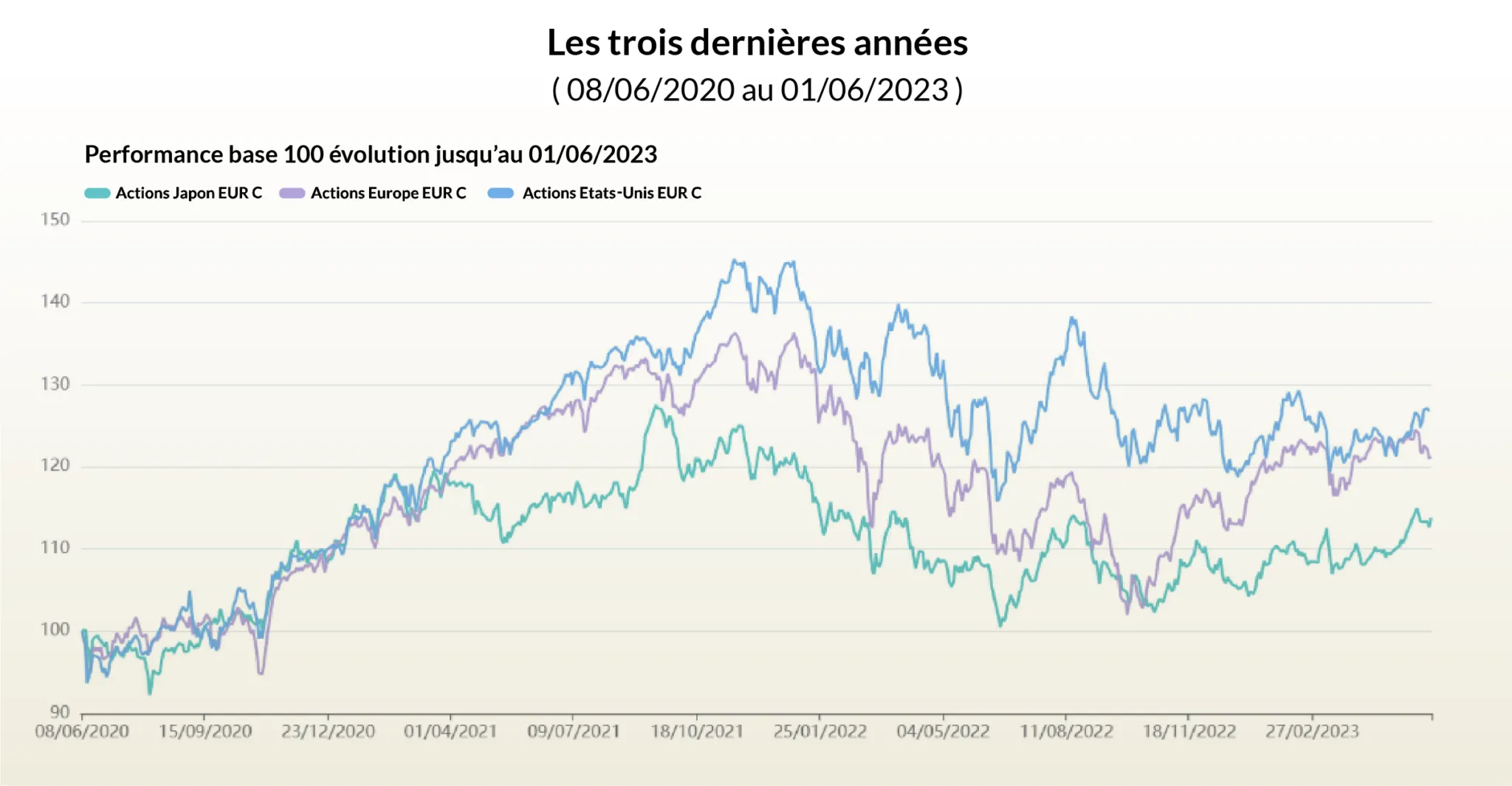
Indeed, the expected growth recovery would be greatly diminished and the European and/or American equity market would regain its attractiveness as observed in recent years.
Past performance does not guarantee future results. The content above does not constitute investment advice. It is an objective analysis of financial information.