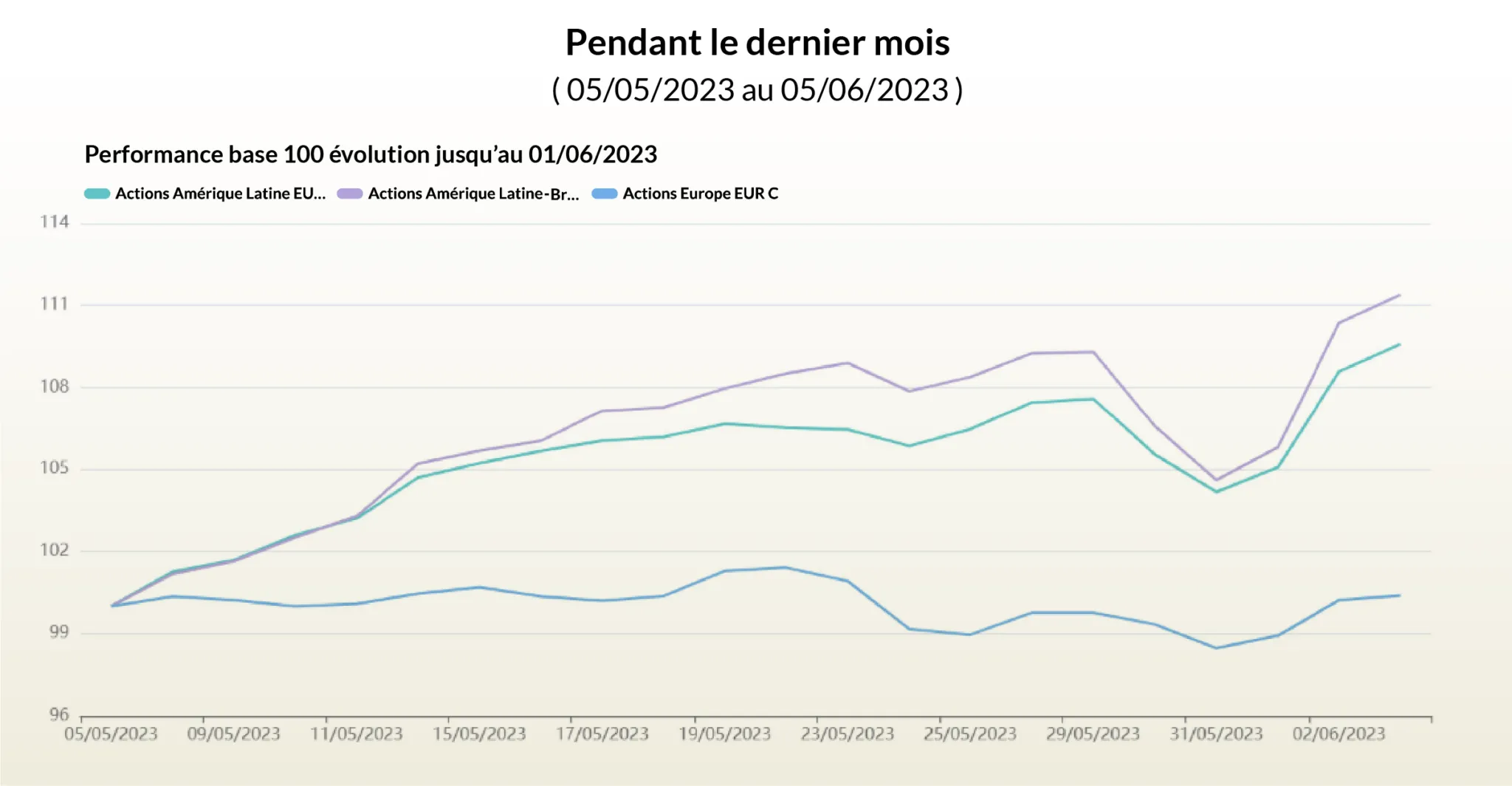
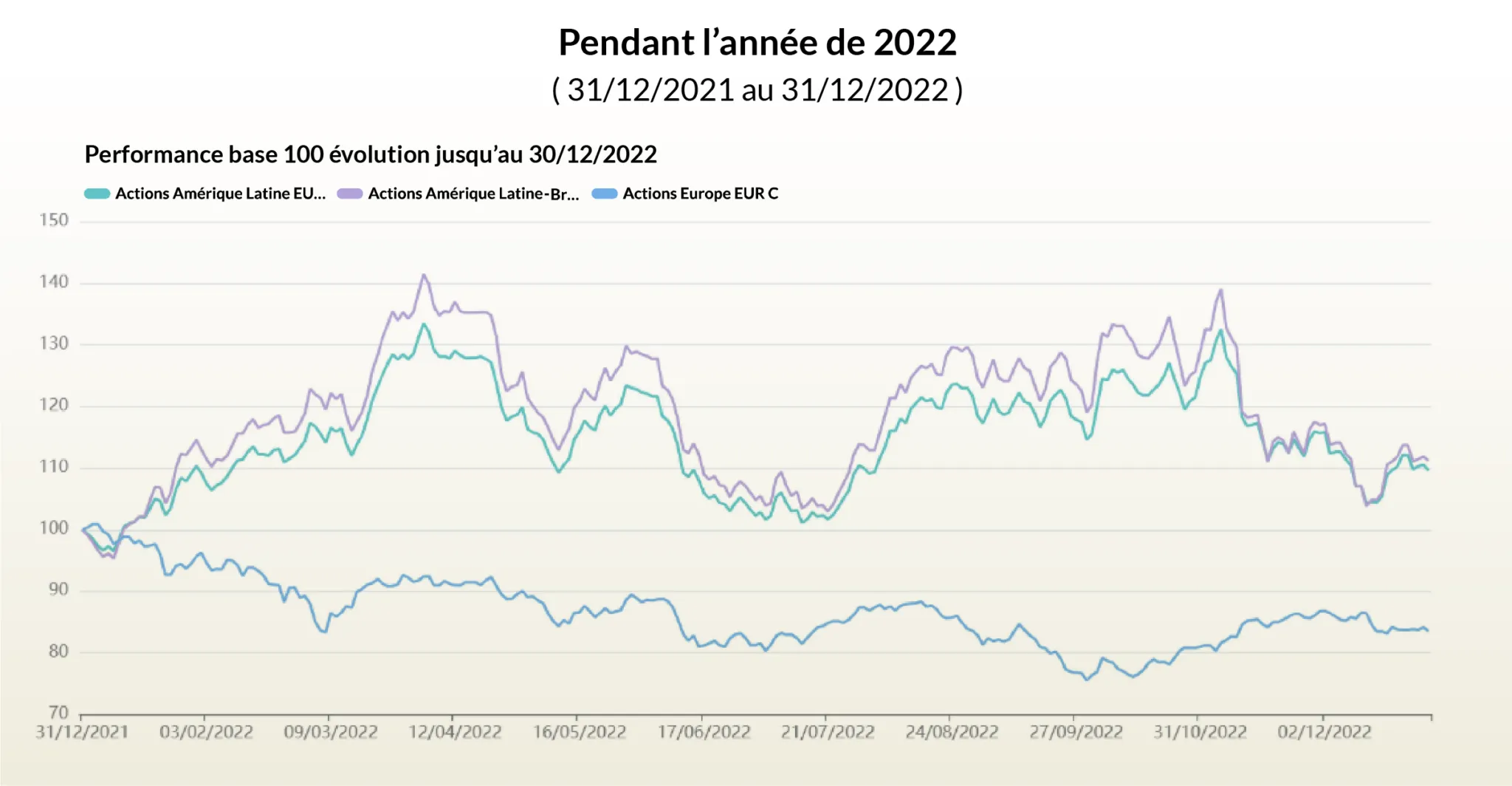
Overview: Brazilian Equities Outperform in 2022 and Over the Past Month — Why?
Brazil’s economy, at a decisive crossroads, is under the influence of diverse economic and political forces. On one hand, the Central Bank of Brazil is reporting stronger-than-expected economic growth, largely supported by the agriculture and energy sectors. Indeed, these sectors benefited from the conflict in Ukraine, which represented a key factor for the Brazilian economy in 2022. However, the persistently high interest rate of 13.75% is creating economic uncertainty in Brazil. This rate negatively impacts credit flows, retail sales, and industrial production.
On the other hand, Brazil’s inflation rate recorded a surprising decline. This decrease is fueling discussions about a potential interest rate cut by the Central Bank.
However, Brazil’s monetary policy is subject to intense debate, with growing tensions between President Lula and the Central Bank, exacerbated by rising household debt and declining bank lending.
In this uncertain economic context in Brazil, two scenarios are possible. The Central Bank of Brazil could either respond to calls for interest rate cuts, which would support economic growth but could lead to higher future inflation. Alternatively, the Central Bank of Brazil could choose to maintain its high interest rates, limiting economic growth but keeping inflation under control. This situation illustrates the complexity of managing economic growth and inflation in Brazil in 2022.
Scenario 1: The Central Bank of Brazil and Interest Rate Cuts in the Face of Inflation
In this first possible scenario for the Brazilian economy, the Central Bank could lower its rates to stimulate economic growth in Brazil.
This decision could be motivated by a desire to avoid a potential economic slowdown, given the currently high interest rate environment.
Indeed, lower rates are likely to boost investment and consumer spending, which are key drivers of GDP growth in Brazil. However, this monetary policy could expose the Brazilian economy to inflation risks in the medium and long term. This exposure would be more evident if the rate cuts are too aggressive.
At present, this scenario appears to be the one the market is anticipating following the decline in inflation in May.
Scenario 2: The Central Bank of Brazil and Maintaining High Interest Rates
In the second scenario, the Central Bank of Brazil could maintain its high interest rates, focusing on controlling inflation in Brazil to prevent economic overheating. Despite the recent decline in inflation, the Central Bank could fear that rapid economic growth, supported by agricultural and energy exports, may warrant keeping rates unchanged.
However, maintaining high interest rates could slow economic growth in Brazil and increase the debt burden for the government, businesses, and households.
If the macroeconomic conditions partly driven by the war in Ukraine persist, we would be in a climate similar to that of 2022.
Summary
Brazil’s economy is at a decisive turning point, with two possible scenarios linked to the Central Bank’s monetary policy. The actions taken in the coming months will have significant repercussions on the Brazilian economy, underscoring the need for the Central Bank to navigate these complex economic and political challenges with caution.
Past performance is not indicative of future results. Fees are included in the performance figures. The content above does not constitute investment advice. It is an objective analysis of financial information.