Overview
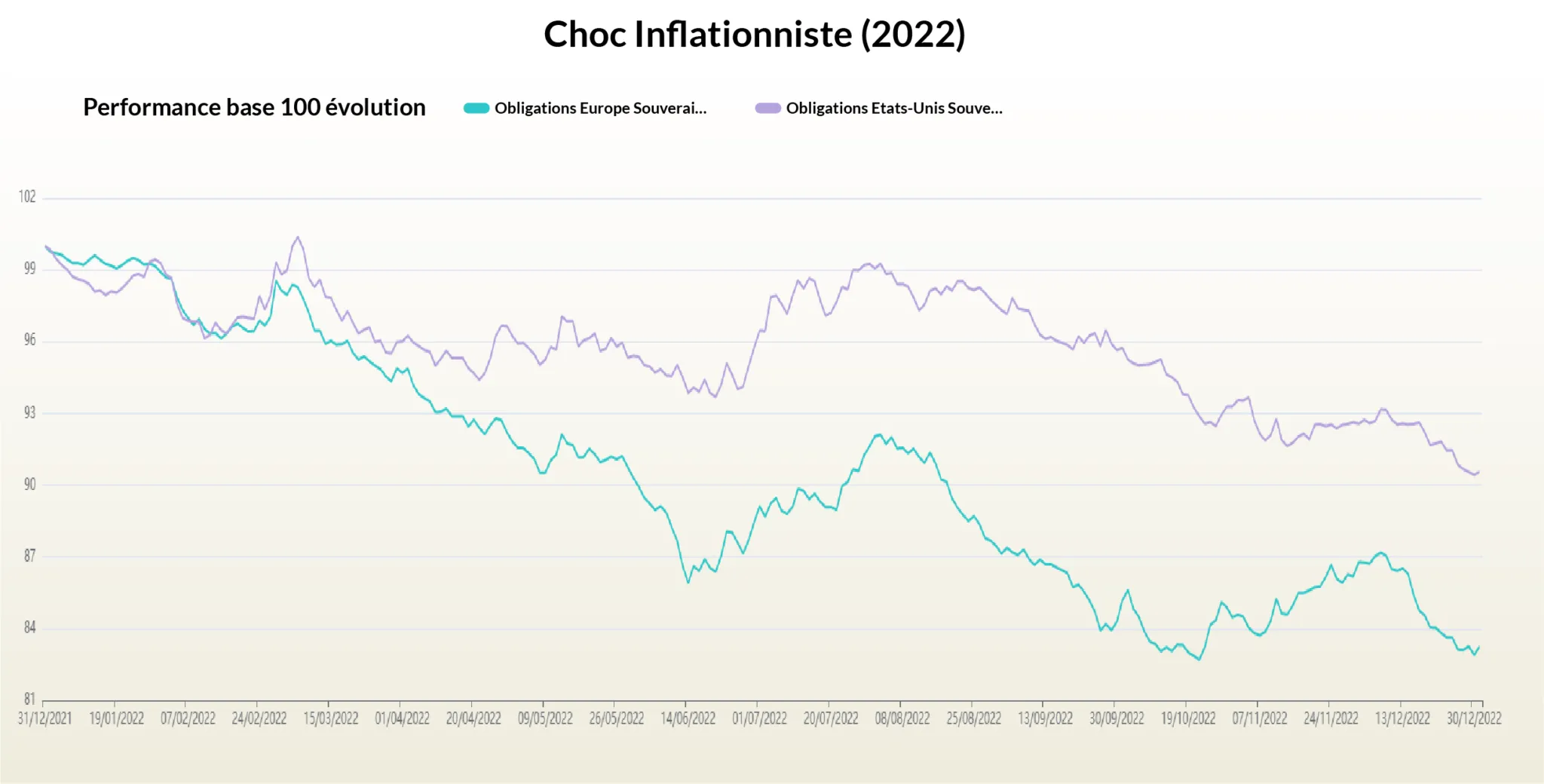
During the rate-hiking cycle by central banks in developed countries, European Sovereign Bonds suffered more than US Sovereign Bonds.
This is due to 3 reasons:
- Europe was the most impacted by “imported” inflation from energy and commodity prices due to the war in Ukraine
- The ECB reacted late compared to the Fed, so the market anticipated a catch-up in its monetary policy
- European sovereign rates were lower, so mechanically, for the same level of rate increase, the impact on bond prices is greater
Current Situation
Inflation remains strong but signals point to its stabilization. However, indicators showed the negative impact of rate hikes on industrial sectors, although the services sector persists. This generates a recessionary atmosphere.
Furthermore, the latest news about the SVB bankruptcy and the Credit Suisse issue are accentuating fears of an economic and financial crisis.
Scenarios
Inflationary Scenario
The recent bank failures would be anecdotal, the services sector continues to drive employment upward, and industries hold firm.
However, if core inflation rises again, forcing the ECB to be tougher than central banks in the rest of the world, “European Sovereign Bonds” could then continue to suffer as in 2022.
Recessionary Scenario
The banking crisis reveals a deeper weakening of the economy. Leading indicators confirm an entry into recession.
In this case, central banks would be forced to ease their monetary policy, which would be favorable for European sovereign bonds.
Past performance is not indicative of future results. Fees are included in the performance figures. The content above does not constitute investment advice. It is an objective analysis of financial information.