Introduction
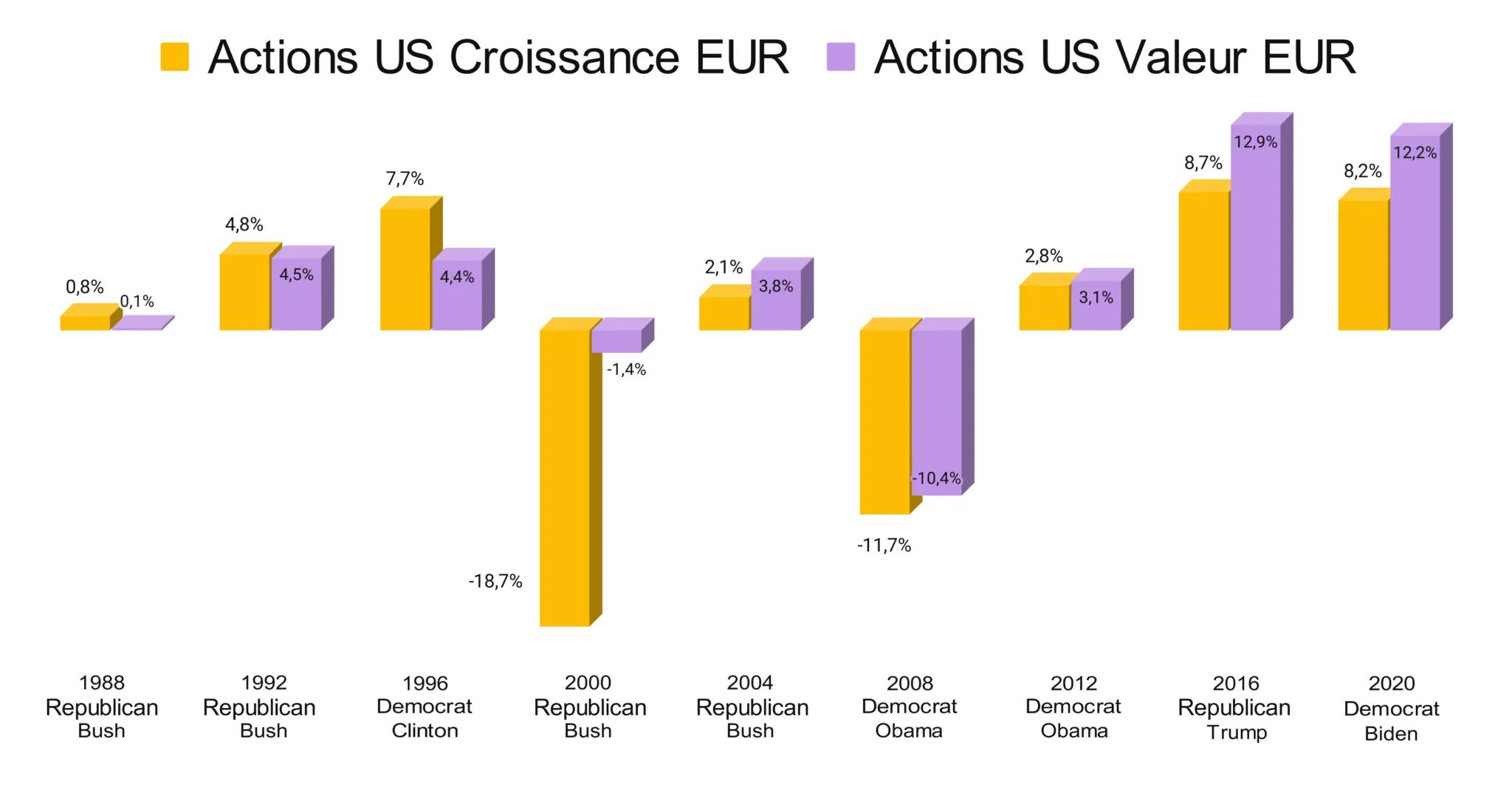
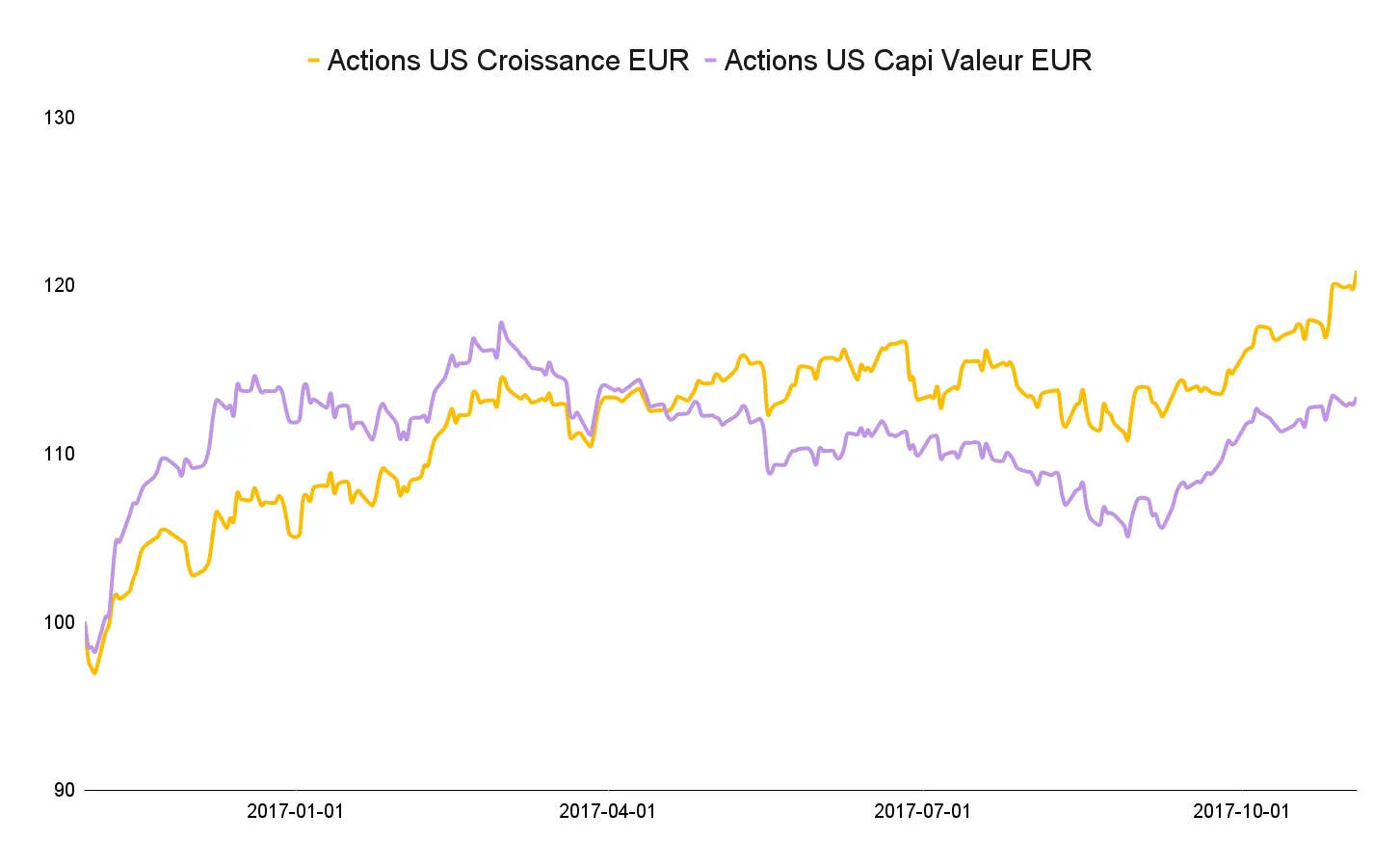
Our analysis of market trends following U.S. presidential elections revealed that US Value Equities generally outperform US Growth Equities. Since 1980, this dominance has been confirmed in 6 out of 9 elections, including Donald Trump’s election in 2016.
However, history does not guarantee the future. With Trump’s re-election in 2024, it is essential to deepen the analysis to understand how economic and political factors can influence these two investment styles.
2-Month Post-Election Performance (US Growth VS Value Equities)
1. The Eternal Investor Dilemma: Growth or Value?
Style Definitions
- Growth Equities: These stocks comprise high-expansion companies, often in technology or emerging sectors. They reinvest their profits for growth, with often elevated valuations.
- Value Equities: These stocks represent companies that are undervalued relative to their financial and/or commercial potential. They are more tied to cyclical sectors such as energy, banks, or industrials.
Key Economic Factors
| Economic Factor | Impact on Growth | Impact on Value |
|---|---|---|
| Interest rate cuts | Reduces the cost of capital for high-expansion companies. | Improves financing conditions for cyclical and stable companies. |
| High inflation | Negatively affects their future cash flows. | Favors cyclical companies able to raise their prices. |
| Steepening yield curve | Less favorable, as it attracts fewer investors toward growth stocks. | Favors the cash position of cyclical companies by reducing short-term financing costs. |
For investors, the choice between Growth and Value is therefore a complex dilemma, as performance varies according to economic conditions and political cycles.
2. The Trump Effect: What Impact in 2025?
The initial measures and outlook of the Trump presidency in 2024 influence the two styles of US equities differently.
Growth: A Short-Term Boost
- Interest rate cuts: Trump could pressure the Fed to accelerate short-term rate cuts, as in 2018. This reduces the cost of capital for technology companies.
- Deregulation: Deregulation in cryptocurrencies and artificial intelligence (AI) could stimulate tech giants, the drivers of Growth Equities.
- Yield curve: A steepening curve could slow investor appetite for Growth.
Value: Long-Term Potential
- Inflation and fiscal stimulus: Trump’s economic stimulus program, combined with high tariffs, could reignite inflation. This favors cyclical companies that easily adjust their prices.
- Steepening yield curve: Lower short-term rates combined with stable long-term rates favor Value companies.
- Interest rate cuts: This significantly improves financing conditions for cyclical companies.
12-Month Post-Election Performance 2016
3. Scenarios for the Next 6 to 12 Months
Central Scenario: Growth in the Short Term, Value in the Long Term
In the short term, Growth equities could outperform thanks to enthusiasm around tech deregulation. However, their already elevated valuations limit their medium-term potential.
In parallel, Value equities could take the lead, supported by solid fundamentals such as moderate inflation and a steepening yield curve.
Optimistic Scenario: Marked Value Outperformance
If the U.S. economy rebounds strongly, inflation could rise rapidly, favoring Value equities. This scenario would drive increased demand for cyclical sectors.
Pessimistic Scenario: Value Impacted by Crisis
In the event of a recession, Value companies, often more cyclical, would suffer more from the effects of an economic slowdown. Growth Equities, which do not depend directly on domestic demand and often have higher margins, would be more resilient in this scenario.
Conclusion: Growth or Value in 2025?
Historical data shows that US Value Equities generally outperform US Growth Equities after American elections.
However, in 2025, Growth could initially benefit from the Trump effect, before economic fundamentals favor Value over the medium term.
About the author: Yufeng Xie is the CEO and co-founder of EnvestBoard, an innovative investment decision-support platform.
Past performance is not indicative of future results. The content above does not constitute investment advice. It is an objective analysis of financial information.